
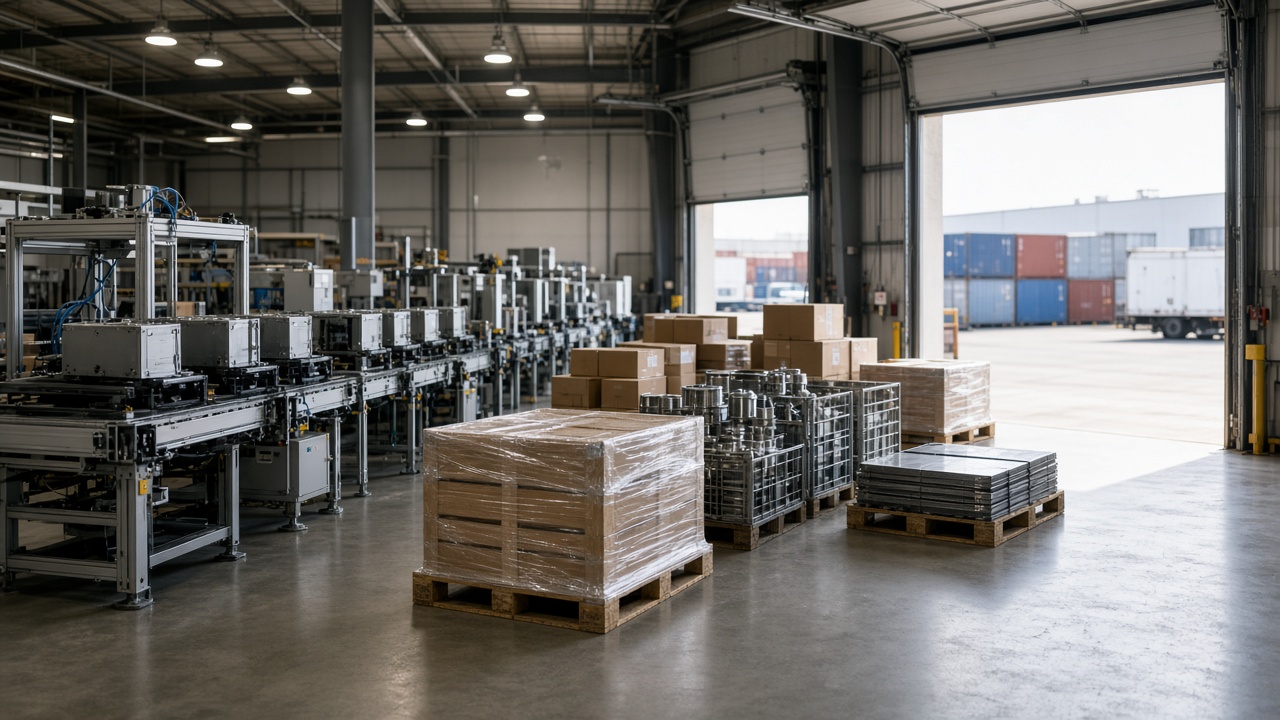
Tariffs, Manufacturing, and Foreign-Trade Zones: What an FTZ Can Mean for Your Bottom Line
In this post, we’ll explore how tariffs interact with Foreign-Trade Zones (FTZs)—and what that can mean for manufacturers weighing cash flow, landed cost, and long-term competitiveness.
Tariffs are back at the center of supply-chain conversations. For companies that import parts, components, or raw materials—and especially for those that manufacture, assemble, or finish goods in the United States—those duties aren’t just a line item. They affect working capital, pricing, and how competitive a plant can be against overseas producers. A Foreign-Trade Zone won’t rewrite trade policy, but it can change when and how much duty you pay on merchandise that moves through your operation.
A quick refresher: what an FTZ does
A U.S. Foreign-Trade Zone is a secure area, under U.S. Customs and Border Protection oversight, treated as outside U.S. commerce for customs purposes until goods enter the domestic market. Merchandise can typically be admitted, stored, tested, manipulated, manufactured, or (when appropriate) destroyed under zone procedures. Duties and certain fees generally apply when goods leave the zone for U.S. consumption—not merely when they arrive at the door.
Here in West Tennessee, FTZ #283 already covers a large share of the region’s allowable geography, giving local manufacturers access to a tool many peer communities use to support industry and attract investment.
How tariffs and FTZs interact for manufacturers
1. Duty deferral and cash flow
Without an FTZ, duties often come due when merchandise is entered into U.S. commerce—frequently close to arrival. In an FTZ, duty payment is generally deferred until goods leave the zone for domestic consumption. For a manufacturer holding imported inventory, that timing difference can ease cash-flow pressure: capital stays in the business longer instead of sitting in prepaid duties on stock that hasn’t yet become finished goods or sales.
2. Inverted tariff relief
Sometimes the duty rate on imported parts or materials is higher than the rate on the finished product you’d make from them. That “inverted” structure can put U.S. manufacturers at a disadvantage versus overseas competitors who assemble abroad and ship a finished item at the lower finished-goods rate. Under FTZ manufacturing authority, companies may be able to elect to pay duty at the finished-product rate (subject to program rules and approvals). For many plants, this is one of the most meaningful manufacturer-specific FTZ benefits—and a direct answer to tariff structure, not just tariff timing.
3. Exports
Goods exported from an FTZ generally do not incur U.S. Customs duties that would apply if those same goods entered U.S. commerce. For manufacturers serving both domestic and export customers—or using West Tennessee as a production base for global markets—that can improve the economics of export-oriented production and help keep U.S. capacity in the mix.
4. Scrap, waste, and yield loss
Manufacturing rarely converts 100% of input material into salable product. Scrap, trimming, and process loss are normal. In an FTZ context, duty generally isn’t owed on merchandise that never enters U.S. commerce as a dutiable product—including certain scrap or destroyed goods under applicable procedures. When duty rates on inputs are elevated, avoiding duty on material that never becomes a saleable unit can matter more than it did in a lower-tariff environment.
5. Weekly entry and Merchandise Processing Fee (MPF) savings
CBP merchandise processing fees are assessed on formal entries, with ad valorem amounts subject to minimums and caps that change over time. FTZ users can often file on a weekly entry basis, consolidating what might otherwise be many individual entries. For manufacturers with frequent inbound shipments of imported materials, that can reduce cumulative MPF costs at a high level—another operational saving tied to how customs entries are structured, not to rewriting duty rates themselves.
(Educational economic-development information, not legal, tax, or customs advice. Actual savings depend on your import profile, classifications, zone procedures, and professional guidance.)
Manufacturer impacts that show up on the shop floor and in the P&L
- Cash flow — Deferring duty until goods enter U.S. commerce can free working capital tied up in inventory.
- Landed cost — Inverted-tariff elections, export treatment, and reduced duty on scrap can lower the true cost of producing in the U.S.
- Competitiveness — Leveling duty treatment versus foreign finishers helps U.S. plants compete on cost without moving production offshore.
- Planning — More predictable duty timing supports inventory strategy, pricing, and expansion decisions.
None of these replace strong operations, workforce, or logistics—but when tariffs are a material cost, FTZ tools can be part of keeping manufacturing competitive in places like West Tennessee.
When is an FTZ worth a closer look?
An FTZ conversation is often worthwhile if you:
- Import a meaningful share of parts, components, or raw materials
- Face material duty rates on those inputs (including stacked or special tariffs where applicable)
- Manufacture or assemble in the U.S. and see higher rates on inputs than on finished goods
- Export a portion of production, or destroy/scrap dutiable material in the process
- Receive frequent imported shipments where entry fees add up
If imports are minimal and duty exposure is low, the operational requirements of a zone may outweigh the benefit. A simple internal screen—import volume, duty rates, scrap/export share, and shipment frequency—usually tells you whether a formal cost-benefit review makes sense.
The West Tennessee angle
Manufacturers in our region already compete on location, workforce, power, and logistics. FTZ #283 adds a federal customs tool that many site selectors expect to see on the table. Whether you’re expanding an existing plant or evaluating a new project, understanding how tariffs and FTZ benefits interact helps you compare West Tennessee options on total cost—not just sticker price.
Bottom line
Tariffs raise the stakes on every imported input. A Foreign-Trade Zone won’t eliminate trade policy uncertainty, but it can improve when you pay, what rate you may elect in manufacturing scenarios, and whether you pay at all on exports and certain scrap—while offering high-level savings on entry-related fees for higher-volume importers.
If your operation imports to manufacture, it’s worth a fresh look at FTZ options in West Tennessee. We’re here to help you understand the program and connect with the right next steps.
Please contact WTIA if you have questions about FTZ #283 or how these concepts might apply to your facility.
